Hillsborough County Dog Registration Information
Service Dogs and Emotional Support Animals in Hillsborough, New Hampshire
If you’re asking where do I register my dog in Hillsborough County, New Hampshire for my service dog or emotional support dog, the most important thing to know is this: in New Hampshire, a dog license in Hillsborough County, New Hampshire is typically issued by the city or town clerk in the municipality where your dog is kept—not by a private registry and usually not by the county as a single centralized office.
This landing page explains where to register a dog in Hillsborough County, New Hampshire, what paperwork you’ll likely need, how rabies vaccination ties into licensing, and how licensing differs from service dog legal status and emotional support animal (ESA) rules.
Where to Register or License Your Dog in Hillsborough County, New Hampshire
Because licensing is handled locally, below are example official offices within Hillsborough County that commonly process dog licenses (usually through the City Clerk or Town Clerk/Tax Collector). If you live in a different Hillsborough County municipality, contact your local town or city clerk’s office for the correct licensing process.
Example City Office: Manchester City Clerk (City of Manchester)
Manchester provides dog licensing through the City Clerk and notes that proof of rabies vaccination is required before a license is issued. The city also describes local late fees for licensing after the annual renewal period.
Example City Office: Nashua City Clerk’s Office (City of Nashua)
Nashua’s dog licensing information emphasizes providing proof of a current rabies vaccination and explains possible late fees and civil forfeiture if dogs are not licensed by the annual deadline.
Example Town Office: Merrimack Town Clerk/Tax Collector (Town of Merrimack)
Merrimack explains that state law requires licensing in the town where the dog is kept, that owners must present a valid rabies certificate, and that veterinarians report rabies vaccinations to clerks—often triggering reminder notices if a dog is not yet licensed.
Example Town Office: Amherst Town Clerk (Town of Amherst)
Amherst’s dog licensing page describes annual licensing in the town where the dog is kept, the May 1–April 30 licensing year, and the requirement to present a valid rabies certificate.
Overview of Dog Licensing in Hillsborough County, New Hampshire
The statewide rule: license in the town/city where your dog is kept
New Hampshire law requires that every owner or keeper of a dog 4 months old or over annually register and license the dog in the city or town where the dog is kept. Your municipality (through the clerk) issues the license and tag, and the annual license period runs May 1 through April 30 (regardless of when you obtain the license). This is the backbone of how a dog license in Hillsborough County, New Hampshire works: the state sets the framework, and local clerks administer it.
Rabies vaccination is required before licensing
Before a license is issued, you must provide verification that your dog has been vaccinated against rabies (with limited exceptions when a valid certificate is already on file with the clerk through veterinarian reporting). This requirement ties dog licensing to public health and rabies enforcement, and it is one reason licensing is often discussed alongside animal control responsibilities.
How Dog Licensing Works Locally in Hillsborough County, New Hampshire
Step 1: Identify your correct licensing office
To answer where to register a dog in Hillsborough County, New Hampshire, start with your municipality:
- City residents (for example, Manchester or Nashua) usually license through the City Clerk.
- Town residents (for example, Merrimack or Amherst) usually license through the Town Clerk or Town Clerk/Tax Collector.
If your dog lives in Hillsborough County but you cross municipal lines (for example, shared custody, multiple addresses, or seasonal stays), ask your clerk which location counts as “kept” for licensing purposes.
Step 2: Gather required documentation
While each office may have small local differences, most will ask for:
- Rabies vaccination proof (certificate from a licensed veterinarian)
- Spay/neuter proof (only if you want the altered rate)
- Owner identification (sometimes needed for discounts like senior rates)
- Fee payment (fees vary by municipality; some offer online renewal, by-mail, or in-person options)
Step 3: Apply in person, by mail, and/or online (varies)
Many Hillsborough County municipalities allow dog licensing in person during clerk hours, and some allow mail-in or online renewal. If you’re newly licensing a dog for the first time in a municipality, you may need to provide documentation even if renewals can be processed more quickly later.
Step 4: Renew annually and avoid late fees
New Hampshire municipalities commonly emphasize an annual renewal deadline of April 30. After that, local late fees and civil forfeiture may apply. If you move within Hillsborough County to a different town/city, plan to update your licensing with your new municipality.
Service Dog Laws in Hillsborough County, New Hampshire
Dog license vs. service dog status: they are different things
A dog license is a local government registration/tag tied to rabies vaccination and municipal animal control administration. A service dog, by contrast, is defined under federal ADA rules as a dog individually trained to do work or perform tasks for a person with a disability. Your dog can be a fully legitimate service animal and still need a normal local dog license.
No mandatory “service dog registration” for public access
Under the ADA, a city or business generally cannot require documentation, certification, or a special ID card as a condition for entry. Covered entities may ask only limited questions when it is not obvious the dog is a service animal. The ADA also states that mandatory registration of service animals is not permissible, even though the service animal is still subject to general local licensing and vaccination rules.
New Hampshire access rights (state law)
New Hampshire law provides that service animals may accompany their handlers (and, in certain contexts, trainers) into public facilities, housing accommodations, and places of public accommodation, subject to conditions and limitations established by law and applied alike to all persons. This state-level access protection works alongside federal ADA protections.
Emotional Support Animal Rules in Hillsborough County, New Hampshire
An ESA is not a service animal for public places
Emotional support animals provide comfort or support through their presence, but they are not service animals under the ADA unless they are trained to perform specific tasks related to a disability. That means an ESA generally does not have the same public-access rights as a service dog in places like restaurants or retail stores.
ESAs are primarily a housing accommodation issue
ESAs most often come up under housing rules as a form of “assistance animal.” Federal housing guidance explains that an assistance animal can include an animal that provides emotional support that alleviates one or more identified effects of a person’s disability, and that housing providers may have to consider reasonable accommodation requests even where pets are otherwise restricted.
Licensing still applies to ESAs
Even if your dog is an emotional support animal, you should still obtain the appropriate local license for the city or town where your dog is kept and ensure rabies vaccination is current. An ESA letter (or similar documentation for housing) is not a replacement for local licensing and rabies compliance.
Frequently Asked Questions
Most dog registration/licensing is handled by your local city or town clerk (for example, Manchester City Clerk, Nashua City Clerk, Merrimack Town Clerk/Tax Collector, Amherst Town Clerk). In other words, you usually don’t “register with the county” as a single office. This is why the best answer to where to register a dog in Hillsborough County, New Hampshire is: start with your municipality.
A municipality generally requires proof of current rabies vaccination before issuing a dog license. Many offices also request:
- Spay/neuter certificate (to qualify for the altered rate)
- Identification (sometimes for discounts)
- Fee payment (varies by municipality)
Under the ADA, staff generally cannot require documentation that the dog is a service animal, and mandatory service animal registration is not allowed as a condition of public access. However, the ADA also explains that service animals must still follow general local animal control and public health requirements—meaning a normal local dog license and rabies compliance may still apply.
Usually no. Under ADA definitions, an ESA is not a service animal for public access unless the dog is trained to perform specific tasks related to a disability. ESAs are most commonly addressed through housing reasonable accommodation processes rather than general public access.
In New Hampshire, veterinarians may report rabies vaccinations to the town/city clerk, and clerks can send notices to owners of dogs that appear unlicensed. This supports rabies enforcement and local licensing compliance.
What You May Need
- rabies vaccination proof
- identification
- proof of residency
- licensing fee
Quick clarity
Register A Dog In Other New Hampshire Counties
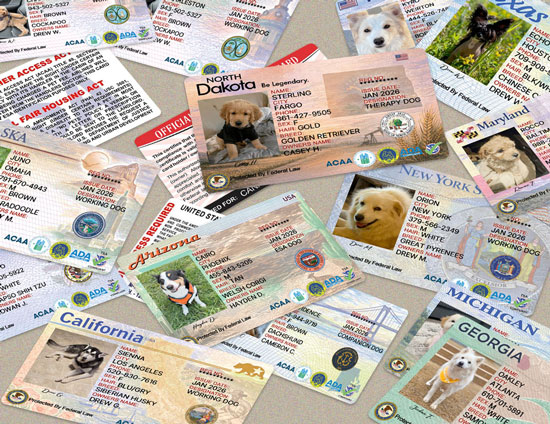
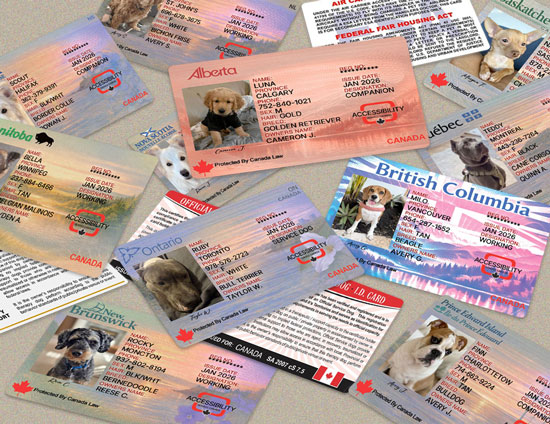
Select your county below to get started with your dog’s ID card. Requirements and license designs may vary by county, so choose your location to see the correct options and complete your pup’s registration.